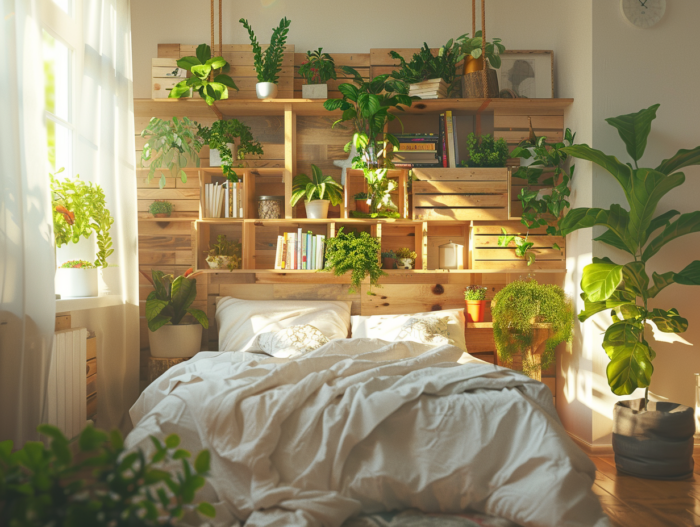
Redefining personal space through DIY initiatives is a trend that is gaining popularity, especially with wood as the material of choice. The bedroom, a sanctuary for relaxation and rest, is the perfect place to express creativity and add a personal touch. DIY wood projects offer a multitude of options, from sculptural headboards to practical wall shelves. These creations not only beautify the room; they create a warm and authentic atmosphere. Working with wood can be therapeutic, providing a double reward: a revitalized space and invaluable personal satisfaction.
Creating Wooden Furniture for a Customized Bedroom
In the twists and turns of contemporary living, the bedroom must reflect the identity of those who sleep there. For a child’s room, the project ‘New Life for the Child’s Room’ embodies this quest for personalization. Think of wooden furniture through the lens of functionality and aesthetics: from clever storage solutions to fairy lights that bring a unique decorative touch and a warm ambiance. Creating a slatted headboard can become the focal point of the room, uniting a clean aesthetic with the natural charm of wood.
Decor ideas abound to transform your bedroom into a haven of peace. The chalkboard offers a drawing and expression space for the child, sparking creativity and learning. Cushion covers, on the other hand, add a touch of style and comfort to the bedding, while recycled decorative items allow toys to be transformed into decorative elements, resulting in a room with a unique and responsible character.
Expand the realm of possibilities with DIY bed projects that combine practicality and aesthetics. Consider the bed as a blank canvas ready to be enhanced by wooden elements. Customization goes beyond material choices; it encompasses color, shape, and functionality. The child’s room then transforms into a space where imagination reigns, where each piece of furniture tells a story.
Wall decoration can prove to be more than just an ornament. Ensure that each addition harmonizes with the whole, highlighting the atmosphere you wish to create. DIY wood projects fit into this personalization logic, inviting reflection on the space and how it can be optimized while adding a personal signature. The bedroom becomes a living canvas, where each element contributes to a coherent and warm aesthetic.
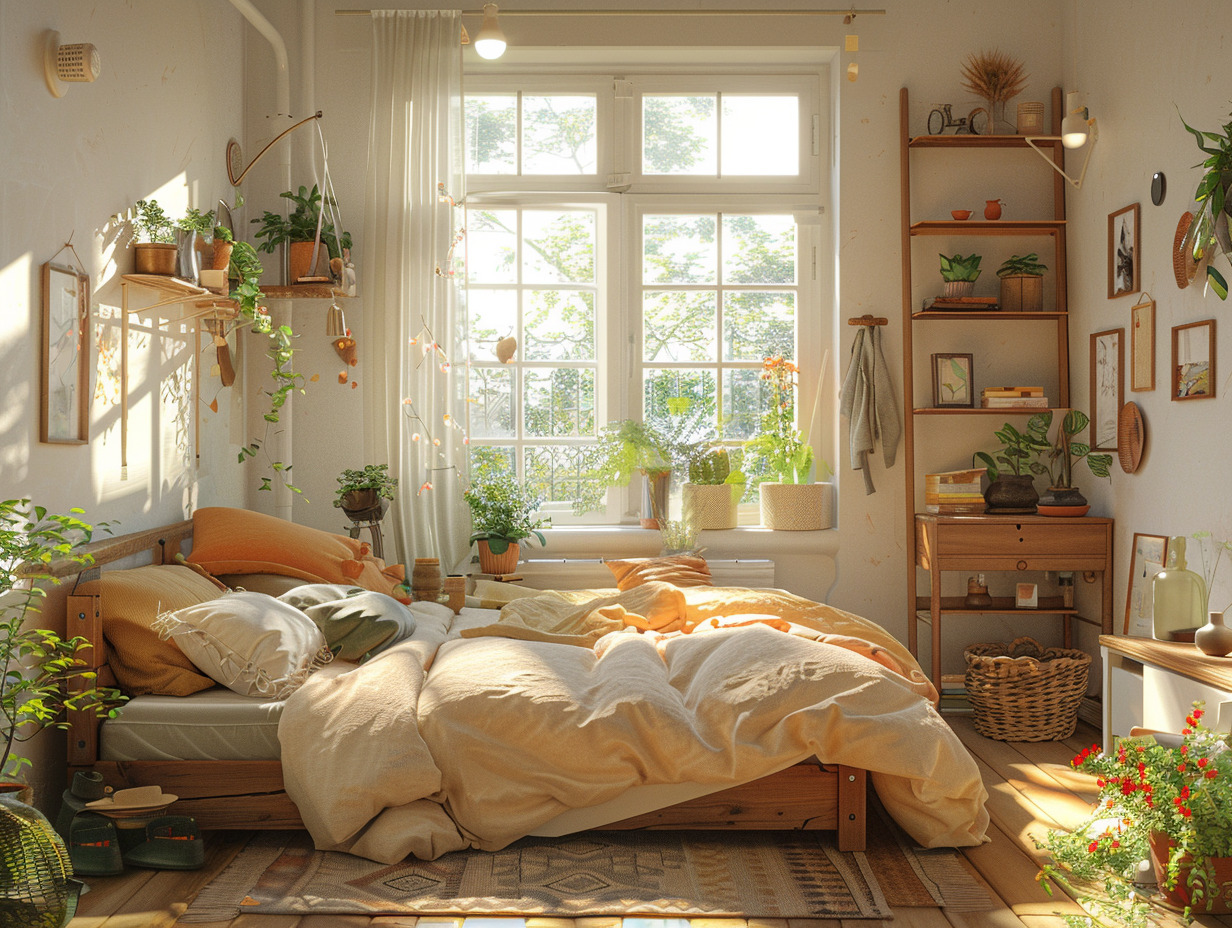
Techniques and Tips for Successful DIY Projects
Every DIY enthusiast knows that the success of a wooden DIY project relies on meticulous preparation and precise execution. The customization of furniture and the creation of wooden objects first require detailed planning. Sketch your ideas, define the dimensions, and select the appropriate types of wood for your creations. Technical drawing, often overlooked, is the cornerstone of a successful project; it allows you to anticipate constraints and optimize material use.
Functionality should guide your choices in decoration. Each element must have its reason for being, integrate harmoniously into the space, and meet a specific need. Ergonomics are essential: a well-thought-out piece of furniture is one that goes unnoticed, allowing aesthetics and comfort to take center stage. In terms of decoration, remember that the useful can and should rhyme with the pleasant.
DIY techniques are numerous and varied; they adapt to the complexity of your project and your level of expertise. Whether through assembly, carpentry, or marquetry, each technique has its specifics. Take the time to familiarize yourself with the different tools and methods of working with wood. Well-executed joints and careful finishes will make all the difference in the durability and appearance of your creations.
The involvement of end users, particularly children for a room designed for them, is a key success factor. Involve them in the creation process for a truly personalized space. This can range from choosing colors to selecting drawer handles. This approach contributes to a final result that better meets expectations and strengthens the emotional bond with the created object or piece of furniture.