A motorist looking to replace their car in September 2026 faces a rapidly changing regulatory landscape. With the Euro 7 standard coming into effect, a European regulation on vehicle circularity, and electric ranges being renewed at high speed, purchasing decisions are no longer made based on the same criteria as two years ago.
We take stock of what is changing concretely and the considerations to make before signing an order form.
Euro 7 Standard: What Changes for New Cars Starting November 2026
The Euro 7 standard is not limited to tightening exhaust emission thresholds. It incorporates for the first time emissions related to brakes and tires, two sources of fine particles long ignored by regulations. New types of cars and light commercial vehicles will be affected starting November 29, 2026, according to European regulation 2024/1257. All new vehicles in these categories must comply one year later.
For buyers, the direct consequence is a probable increase in entry-level model prices. Dacia has publicly warned about the risk of low-cost cars disappearing if the regulatory cascade is not streamlined.
Specifically, among the auto news on Actu Buzz, you can find details of these developments and their application timeline, which helps determine whether a targeted model will be delivered under the old or new standard.
The durability of batteries is also part of the Euro 7 scope. Manufacturers will have to guarantee a minimum capacity over a defined period, which changes the game for resale: a Euro 7 compliant electric vehicle will offer better residual value thanks to this battery performance guarantee regulated by law.

Digital Circularity Passport: Unprecedented Traceability for Each Vehicle
The European regulation on end-of-life vehicles, adopted after three years of negotiations, came into effect on August 13, 2026. Its most significant measure for buyers remains the digital circularity passport, mandatory for vehicles placed on the market starting September 1, 2032.
This passport will record the composition of materials, replaceable parts, and disassembly instructions. For a new car buyer in 2026, this does not change anything immediately. However, vehicles purchased today will be resold in a market where this passport will exist, and the lack of traceability could devalue older models.
The text also strengthens manufacturers’ financial responsibility for the end-of-life of vehicles. Design must facilitate disassembly, which pushes engineering departments to rethink assembly. We already see some manufacturers communicating about the recyclability rate of their new models, an argument that will weigh increasingly in comparisons.
Electric Market in Europe: Rapid but Uneven Progress by Country
Data from ACEA reported by Le Figaro in September 2026 confirms that the European market continues to electrify. Progress has been particularly marked in France, Germany, and Denmark, while sales of new gasoline cars have significantly declined in France.
This trend does not mean that the transition is uniform. Several Southern and Eastern European countries lag behind due to a lack of a sufficiently dense charging network or comparable purchase incentives. For a French buyer, the context is favorable: ranges are expanding and competition is driving prices down in the compact electric SUV segment.
Points to Consider Before Buying an Electric Vehicle in 2026
- Energy loss during charging on a domestic outlet: a recent test by ADAC shows that the loss can reach highly variable levels depending on the vehicle, sometimes well beyond what manufacturers claim. Installing a wallbox remains the most reliable solution to limit waste.
- Check if the model is Euro 7 compliant or if it is being released under the old standard: this impacts battery warranty and medium-term resale value.
- Do not overlook insurance costs, which are often significantly higher for an electric vehicle compared to a thermal vehicle of equivalent size.
Low-Cost Cars: The Standoff Between Manufacturers and European Regulation
Dacia is not the only manufacturer sounding the alarm. The cumulative environmental, safety, and cybersecurity standards expected by 2030 represent a cost barrier that entry-level models will struggle to absorb. The question is no longer whether new cars will increase, but by how much.
For motorists on a tight budget, the used car market becomes the main arbitration ground. Recent models compliant with the latest standards retain their value better, while older vehicles risk accelerated depreciation in light of future traffic restrictions.
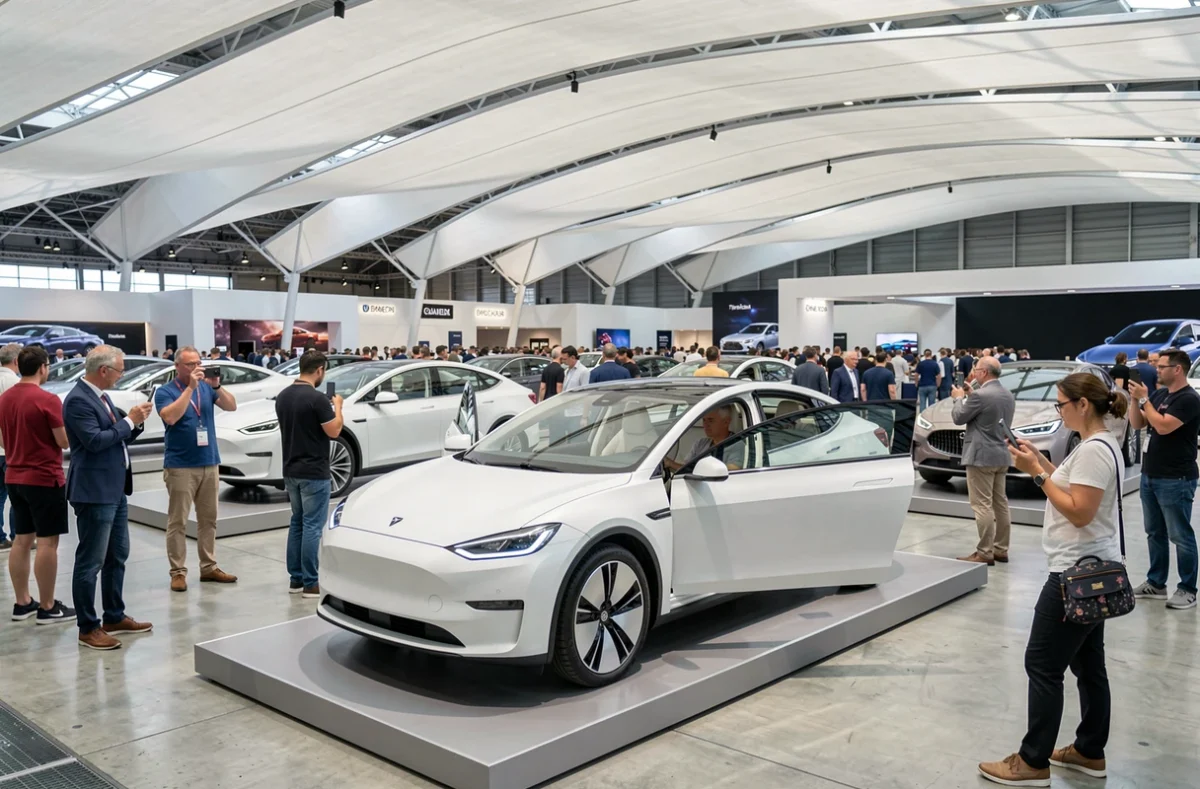
The 2026 Paris Motor Show, which this year hosts several Chinese brands, illustrates this tension well. These manufacturers offer electric vehicles at very competitive prices, but their compliance with future European requirements (circularity, recyclability, digital passport) remains a question mark for buyers concerned about the longevity of their investment.
The automotive news this fall 2026 can be summed up in one equation: rapidly advancing technologies, regulations tightening even faster, and purchasing power that does not always keep pace. Each purchasing decision should consider not only the displayed price but also the regulatory framework in which the vehicle will operate over the next five to ten years.