
Buying perfume online means comparing product sheets without being able to smell the bottle. The difficulty goes beyond the olfactory choice: the price differences between platforms, the variable reliability of descriptions, and the new European labeling requirements make reading a product page more technical than it seems.
This article measures what product sheets really say, what they omit, and how to leverage the available data to buy perfume online without unpleasant surprises.
Fragrance Allergens: What European Regulation 2023/1545 Changes for Online Purchasing
Regulation (EU) 2023/1545, adopted on July 26, 2023, expands the list of fragrance allergens subject to mandatory declaration. For perfumes, classified as leave-on products, the declaration applies beyond the threshold of 0.001%. In practice, this means that the INCI list printed on the bottle must now detail many more substances than before.
The problem for online purchasing is simple: a merchant’s product sheet does not always reproduce the complete INCI list. Many platforms settle for a commercial description, with mentions like “fragrance,” “natural,” or “clean,” without detailing the actual composition. Only the labeling on the bottle is legally binding, not the site’s description.
A buyer concerned about allergies or skin intolerances should prioritize sites that publish the complete INCI list. At a minimum, contacting customer service to obtain this information before placing an order remains necessary.
This detail, rarely mentioned in online perfume comparisons, makes the difference between a controlled purchase and an avoidable skin reaction. To delve deeper into the selection criteria for a reliable store, a perfume buying guide on Masca Online details the checks to perform before validating a cart.

Online Product Sheet and Regulatory Labeling: Comparative Table of Available Information
To measure the gap between what a site displays and what European regulation imposes on the bottle, here is a comparison of the data typically present according to the medium.
| Information | E-commerce Product Sheet (Common) | Regulatory Labeling on the Bottle |
|---|---|---|
| Brand Name and Trademark | Yes | Yes |
| Volume (ml) | Yes | Yes |
| Concentration (eau de parfum, eau de toilette) | Often | Yes |
| Complete INCI List | Rarely | Yes (mandatory) |
| Detailed Fragrance Allergens | Very Rarely | Yes (regulatory thresholds) |
| Country of Manufacture | Sometimes | Yes |
| Batch Number / PAO | No | Yes |
| “Natural” or “Clean” Mentions | Common (not regulated) | Absent (not regulated) |
The central column reveals a recurring information deficit. Sites that display the complete INCI list remain in the minority. Marketing mentions are not framed by any European regulatory definition: a perfume labeled “natural” can contain plant-derived allergens just like a conventional perfume.
“Natural” and “Clean” Mentions on Online Perfumeries: What These Labels Do Not Guarantee
In Europe, so-called natural, organic, and conventional perfumes fall under the same regulatory framework applicable to cosmetic products. The presence of naturally derived ingredients does not automatically reduce the allergenic risk. Some significant oils are among the most frequently declared substances on fragrance allergen lists.
“Dermatologically tested” means that a test has been conducted, not that it excluded any reaction. This nuance is often lost in commercial presentation. A reliable site will specify the protocol or link to the results, while a generic site will use the mention as a sales argument without context.
To assess the quality of a product sheet, three quick checks can help sort serious platforms:
- The INCI list is published directly on the product page, not hidden in a PDF or absent.
- The concentration (eau de parfum, eau de toilette, extract) is clearly indicated, as it influences longevity and price per milliliter.
- Customer reviews mention concrete olfactory details (perceived notes, longevity in hours, projection) rather than vague appreciations.
Comparing the Price of Perfume Online: Variables That Comparators Ignore
Price comparators display the gross price of a bottle, but several variables skew the comparison. The first is concentration: an eau de toilette at 50 euros for 100 ml and an eau de parfum at 80 euros for 50 ml do not have the same real usage cost, as the latter requires less product per application and lasts longer on the skin.
The second variable is format. The price per milliliter significantly decreases for larger formats, but a 200 ml bottle only makes sense if the fragrance has already been tested and approved. Buying a large format of an untried perfume remains the most costly trap of online purchasing.
The third variable, less visible, concerns the manufacturing date. Perfumes sold at very low prices on some clearance platforms may have been manufactured several years ago. The olfactory composition evolves over time, especially if storage conditions have not been adequate.
A price difference of more than a third compared to the usual price should prompt verification of the batch number with the brand.
Test Before Buying a Full Bottle
Several online perfumeries offer samples or discovery sets. This format allows testing a fragrance on one’s own skin for several days, which remains the only reliable method to evaluate longevity, sillage, and the evolution of base notes. A minimum three-day skin test avoids most disappointing purchases.
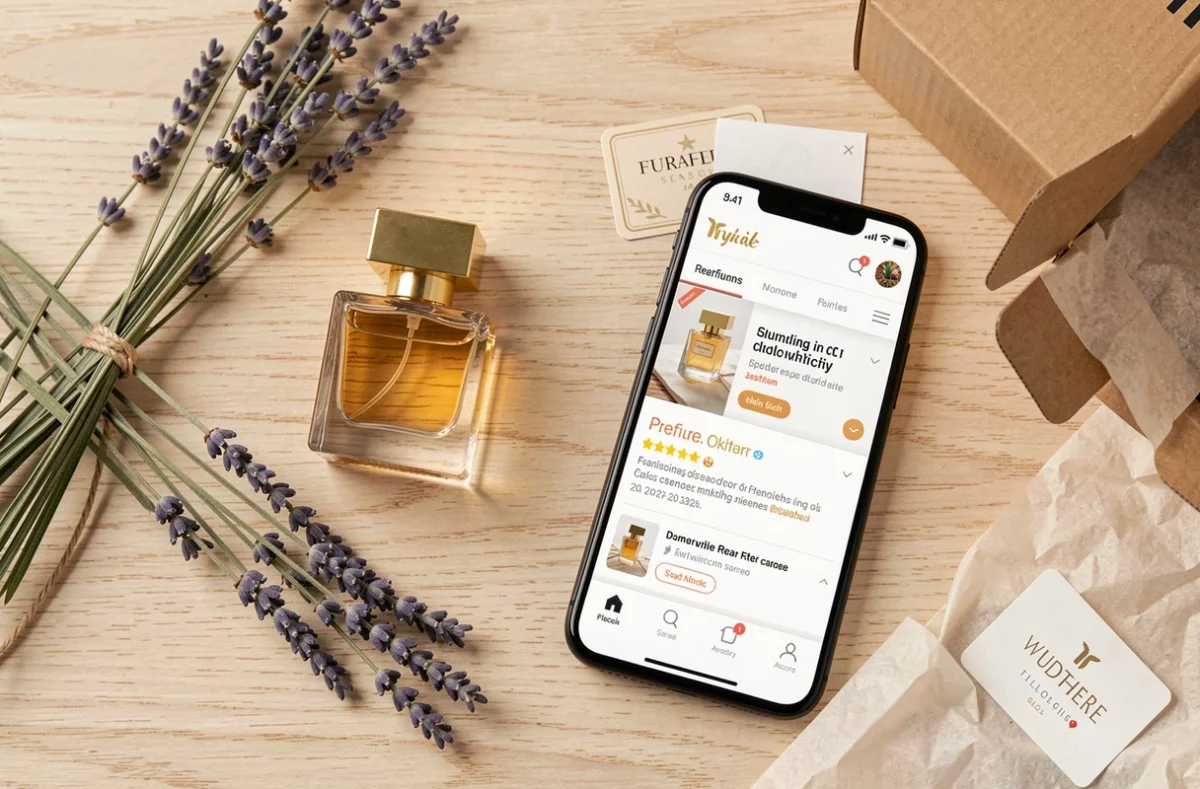
Buying perfume online is less about choosing the fragrance than about the ability to read a product sheet with a critical eye. Sites that publish the INCI list, specify the concentration, and offer trial formats provide a measurable level of transparency.
Regulation (EU) 2023/1545 strengthens labeling requirements on the bottle, but online information remains lagging. Checking what the sheet displays, and especially what it omits, remains the most profitable gesture before validating a cart.