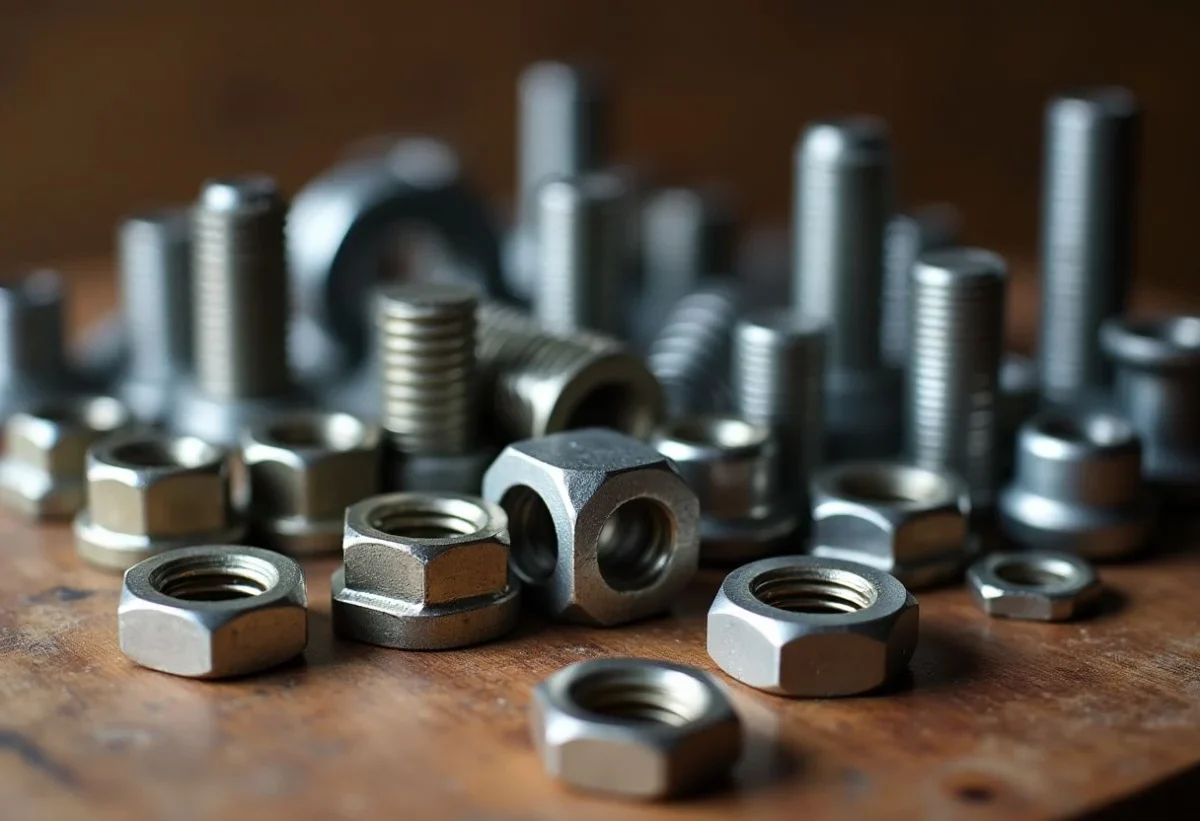
A fascinating world lies behind every bolt and every screw, a world where mechanics and precision come together to bring robust and reliable structures to life. Among these mechanical elements, the lock nut holds a unique and essential place. In the face of intense vibrations or dynamic stresses, this discreet yet powerful component ensures the stability and integrity of assemblies. Beyond the apparent simplicity of this element lies an elaborate technology designed to prevent the unintended loosening of bolts. So, what makes the use of this nut so widespread in the industrial, automotive sectors, and even in some aspects of our daily lives?
Types of Lock Nuts and Their Applications
Exploring the different categories of lock nuts allows us to understand their use in various contexts. Each meets specific requirements, from simple retention to resistance against extreme forces.
- Nylon Lock Nut: Also known as a Nyloc nut, this nut uses a nylon insert to ensure the screw stays in place. It is particularly valued in the automotive industry for its ability to resist vibrations.
- Metal Lock Nut: Made entirely of metal, this nut is ideal for high-temperature environments where nylon would be inadequate. It is often used in industrial machines or heavy equipment.
- Base Lock Nut: Featuring a wide base, it better distributes pressure over the supporting surface, making it indispensable in assemblies requiring a large contact area.
- Autolock Nut: Its unique design allows it to lock without the need for an insert, providing a simple and effective solution for many mechanical applications.
Materials Used for Lock Nuts
The choice of material is crucial for the performance of a lock nut. Different materials offer specific advantages depending on the environment and type of mechanical stress.
Stainless steel lock nuts are appreciated for their corrosion resistance. Ideal for applications in humid or marine environments, they ensure increased longevity. Titanium nuts combine lightness and strength, making them perfect for the aerospace industry.
On the other hand, brass nuts, while less durable, are often chosen for electrical equipment due to their non-magnetic properties and electrical conductivity.
Advantages and Limitations of Lock Nuts
While lock nuts offer numerous advantages, they are not without drawbacks. Their use must therefore be carefully considered based on the specific needs of each application.
- Advantages: They provide increased security against unintentional loosening, reduce the need for frequent maintenance, and allow for significant time savings in mechanical operations.
- Limitations: Despite their advantages, some types of lock nuts can be difficult to remove once installed and require specific tools, which can increase costs in case of maintenance.
Choosing the Right Lock Nut for Your Projects
The diversity of lock nuts on the market requires thorough analysis to select the most suitable for your needs. Here are some tips to guide you in this crucial choice.
Start by assessing the usage environment: temperature, exposure to vibrations, humidity, and other constraints. Then identify the required mechanical characteristics: tensile strength, corrosion resistance, and any other technical specifications.
Finally, consider the economic and logistical aspects, such as acquisition cost and ease of installation.