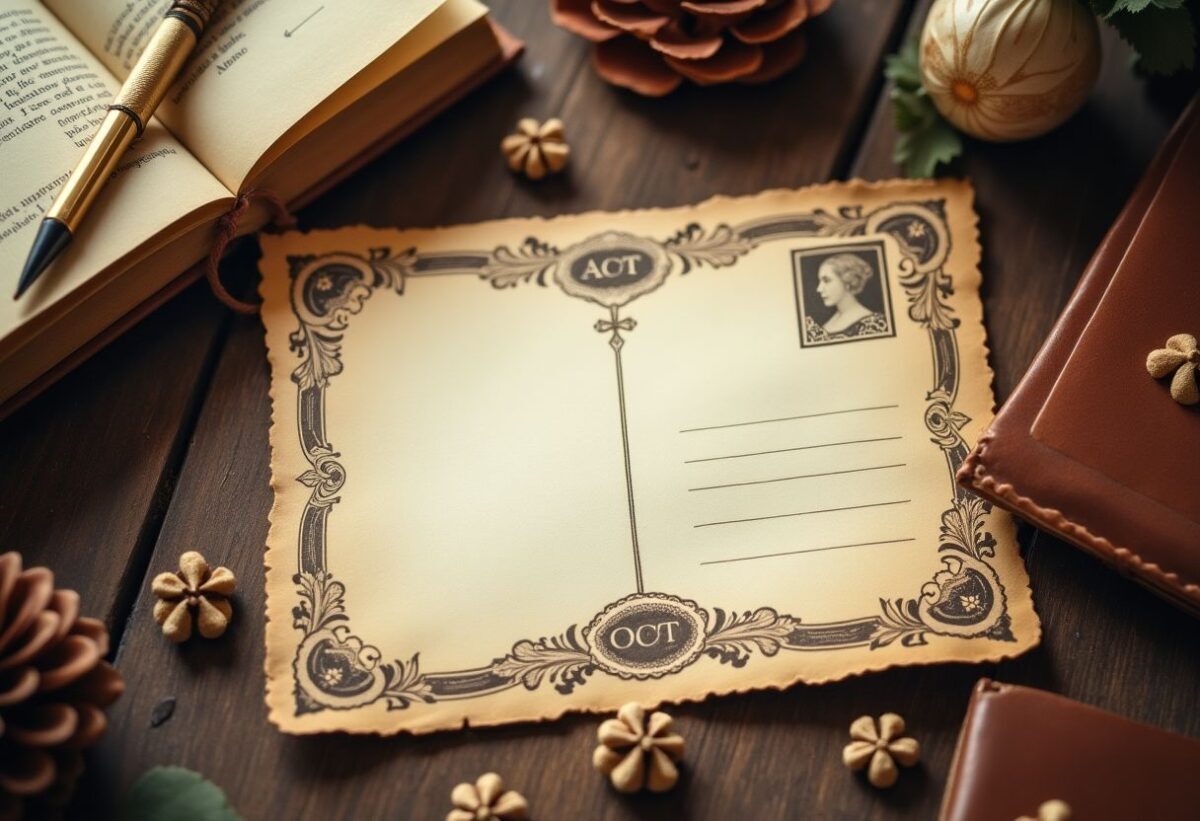
For centuries, cards have served as messengers of our deepest thoughts and our most sincere emotions. They have crossed oceans and ages, carrying with them words of love, comfort, and joy. In an age dominated by digital communication, the charm of sending a card continues to attract those who seek to convey a personal and tangible message. Whether to celebrate a birthday, announce a birth, or simply remind someone that they are in our thoughts, the card remains an irreplaceable tool. It offers a pause in our hectic daily lives, a moment of authentic connection with others. So, why does this little piece of paper continue to be so precious in our modern world?
Origins and evolution of the card
The postcard was born in the 19th century, but its history goes back much further. The earliest forms of written communication already included personal messages exchanged on various mediums.
Greeting cards, for example, trace their origins to ancient China where they were exchanged to celebrate the New Year. In the 15th century, in Europe, handwritten cards were all the rage among the elite. With the invention of printing, their popularity increased. By the early 20th century, illustrated postcards experienced phenomenal growth, becoming a quick and inexpensive way to send news. It was the ideal means to convey a message while sharing an image of the visited place.
- Postcard: A quick communication tool
- Greeting cards: An ancient Chinese tradition
- Printing: A revolution in communication
The symbolism and emotional impact
A card is not just a few words written on paper. It reflects a special attention, a bond between the sender and the recipient.
When a card is received, it provides immediate satisfaction. This gesture demonstrates great thoughtfulness, highlighting the importance of the person to whom it is addressed. Sometimes, a simple phrase can revive a memory, evoke a smile, or even provoke a tear. The emotional impact is enhanced by the choice of design, colors, and words. Each element is carefully chosen to resonate with the recipient. The card becomes an emotional bridge, capable of crossing geographical and temporal distances.
- The choice of words
- The importance of visuals
- The element of surprise
Cards to send in the digital world
With the rise of digital technologies, the concept of the card has also evolved. It has adapted to our times while retaining its essence.
Digital cards offer a new dimension. Welcomed by the young and those seeking a quick and personalized solution, they allow for instant messaging across the globe. Online platforms offer a variety of designs, animations, and even music that enrich the experience. Thanks to a card to send, whether physical or digital, the magic of the message remains intact, touching the recipient’s heart like never before.
- Adaptation to new technologies
- Increased personalization
- Instantaneity and accessibility
Creating an unforgettable card
Creating a memorable card requires thought. Every detail matters to provide a unique experience for the recipient.
Choosing the right paper, a design that reflects the occasion, and sincere words are essential. Current trends include the use of recycled materials for an eco-friendly touch, or handmade cards for a more personalized aspect. The words must be chosen carefully, as they immortalize a precious moment. Finally, a personal touch, such as a drawing or a photo, can transform a simple card into a cherished memory.
- Choice of materials
- Design and personalization
- Personal and sincere message